You are only working with the best machines?
So why not do the same for cleaning your process fluid?

The fluid-dynamically designed accelerator hub and the big effective flow radius help applying the high rotor accelerations of up to 2.000 g effectively on the liquid and the particles to be separated. This is why STA Separators reach significant grade efficiencies for particles down to 1 to 3 µm. For high flow rates up to 250 l/min strong drives are selected accordingly.
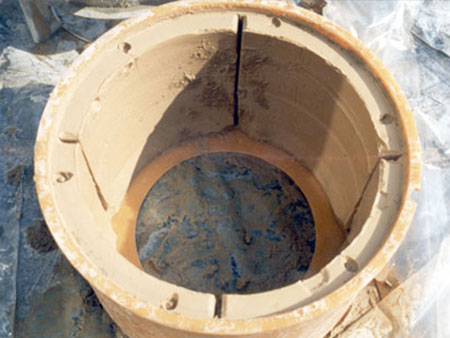
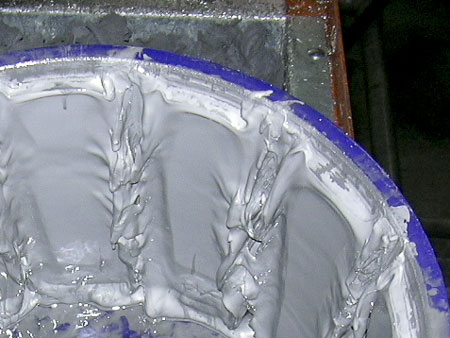
If you decide to go for a centrifugal separator as your separating system, most parameters relevant to filtration, such as shape and composition of the solids, become forgettable. Unfilterable additives like greases and polish, or those problematic ingredients in cast alloys namely graphite and silicon just get removed as well. More examples: chlorinated drawing oils, molybdenum, scales, paint sludge, phosphates, organic slurries, …


STA Separators are available in different material pairings. For demanding applications in medical or food-related industry, or for use with hot and chemically aggressive media all models can be stainless steel built, in both 304 and 316 Ti alloy, accordingly combined with special sealing materials.
Frequently Asked Questions About Centrifugal Separators
What is a centrifugal separator and how does it work?
A centrifugal separator is a centrifuge that uses the effect of phase separation in the centrifugal field to separate solids and, if applicable, light liquid secondary phases from process liquids. Due to high acceleration forces, even the finest particles are reliably separated.
What types of centrifugal separators does STA offer?
STA offers semi-automatic separators, fully automatic (i.e., self-emptying) separators, as well as 3-phase separators for the simultaneous separation of solids and light liquid foreign phases such as oil.
What advantages do centrifugal separators have compared to filters?
Centrifugal separators operate without filtration, thus requiring no filter consumables. Since no filter cake is formed, the shape and size distribution of particles are irrelevant for the separation process, as is the presence of non-filterable additives—clogging is not possible. Separation occurs across the flow direction, so flow rate and separation efficiency remain constant over time.
For which media are STA centrifugal separators suitable?
STA separators are suitable for all types of industrial liquids, such as grinding water, coolant emulsions, machining oil, high-viscosity forming oils, washing and pre-treatment baths, or vibratory finishing water. They are also excellent for hot or aggressive media such as chemical paint strippers. They are ideal for separating solids that form hard, abrasive, and impermeable sludge.
What flow rates are possible?
Depending on the size and application, flow rates of up to approximately 250 liters per minute can be achieved.
How loud are the separators during operation?
Due to the direct drive and the soundproofed housing, STA centrifugal separators operate particularly quietly. Soundproof enclosures are rarely needed.
How is the separated sludge emptied?
In semi-automatic models, emptying is done manually at intervals. Fully automatic separators empty the sludge automatically during operation.
Can existing systems be retrofitted for 3-phase separation?
Yes, many existing STA separators can be retrofitted to a 3-phase version to also separate light liquid foreign phases.
How is integration into existing production systems achieved?
STA centrifugal separators are compactly designed and can be easily integrated into existing systems, both mobile and stationary.
What materials and designs are available?
Depending on the application, various materials such as stainless steel in V2A and V4A, as well as different sealing